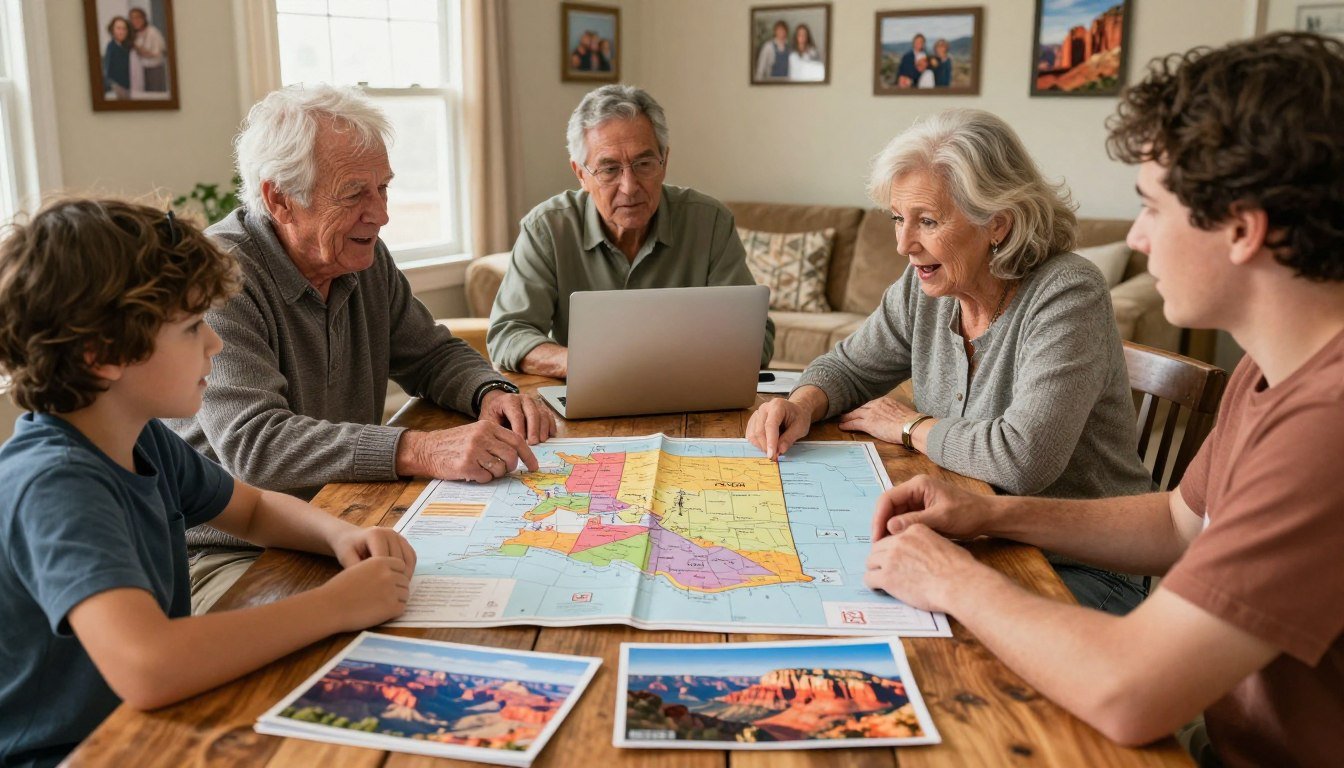
Planning cheap southwest day trips with grandkids can mean adding gas, snacks, and one suspiciously expensive souvenir before breakfast. The kids, of course, may remember the roadside lizard more than the price tag. Their accounting system remains refreshingly mysterious.
A day-use visit is a visit that starts and ends on the same day without an overnight stay. I’ll help you choose a fun family outing that fits your location, budget, and grandkids’ energy, without turning vacation planning into an advanced math exam.
A great day does not need a fancy plan or a heroic credit-card bill. The right outing can be simple, memorable, and easy to manage. First, consider what makes a trip feel manageable for your crew.
Key Takeaways
- Start with a nearby destination and a drive your kids can handle.
- Plan one main activity, then leave room for a rest or nearby stop.
- Check current access, weather, and opening details before you go.
- Keep costs in view, including fuel, food, parking, and optional extras.
- Choose the outing for the children joining you, not just an adult bucket list.
Where Can You Find Cheap Southwest Day Trips With Grandkids?
The cheapest-feeling outing is usually the one that keeps driving and paid add-ons under control. Start nearby, because a long road trip can eat your budget before anyone sees the destination.
Compare the whole day, not just the admission fee. Fuel, admission or parking where applicable, food, and any guided activity all affect the total. Cheap southwest day trips with grandkids near me should begin with the nearest practical hub, not a faraway spot that looks impressive online.
Choose a nearby outing with one main activity, then count the costs that come with the whole day.
Before you choose, run through four trip filters. A little planning now can prevent the classic family debate: “Are we there yet?” followed by “Why are we here?”
- Choose drive time the kids can handle without arriving worn out.
- Pick one main activity that gives the day a clear focus.
- Add one optional nearby stop, not a second full itinerary.
- Make a simple meal plan that suits your route and schedule.
Those choices help you weigh miles, hours, and likely costs without chasing one destination that claims to be the cheapest for every family. A road trip can still feel like an adventure when the drive leaves enough energy for the fun part.
City hubs offer several ways to keep a day manageable. Albuquerque, Phoenix, and Tucson have different places and activities, so you can choose what suits your family.
Which Southwest City Stops Make Easy Kid Days?
Kids who want to climb may like a short outdoor stop, while kids who need variety may prefer a museum-style visit. Match the activity to their energy, not to an adult’s wish to see everything before lunch.
Choose shade and variety for kids who tire easily, and a short outdoor stop for kids who need to move. These city-area places give families options without requiring a full day of walking.
Albuquerque’s Old Town and Petroglyphs
Old Town Albuquerque has historic adobe buildings and local markets, giving kids plenty to look at in a compact area. Markets can make a good pause between sights, though a small hand may spot a souvenir before you do.
Nearby, Petroglyph National Monument has short trails where visitors can look for ancient rock carvings. Keep the walk modest and let the search for carvings become the activity. It gives kids a reason to notice the ground and the surrounding rock, not just ask for a screen.
Phoenix’s Papago Park and Nearby Stops
At Papago Park, Hole in the Rock makes a short, easy hike to a rock viewpoint. It can suit kids who want to move without signing the whole family up for a long trail.
Phoenix-area families can pair a brief outdoor visit with another nearby stop if time and energy allow. Keep that second activity optional. Even the most enthusiastic kid may have a limit, which is inconveniently not printed on a schedule.
Tucson’s Desert Museum and Old Tucson
The Arizona-Sonora Desert Museum combines a zoo, botanical garden, and natural history museum. That mix can hold the interest of kids who like animals, plants, and exhibits, with fewer demands to keep moving down a trail.
Old Tucson is a working film studio and western town, giving children a chance to see a place built around movie-making and Western stories. Nearby Las Vegas, Seven Magic Mountains offers another brief city-area stop, with colorful outdoor art to look at.
Each city stop has a different pace, so choose by the time and movement your family can manage. If you would rather let the land be the main event, Southwest red-rock parks offer another kind of outing.
Where Can Kids Play Among the Red Rocks?
Unusual rock formations can make kids feel like they have found a real-life playground. Keep watch on their footing, since an exciting place to explore is still an outdoor park with uneven ground.
A short trail is still a trail, so match the walk to the youngest child’s stamina. These red-rock options offer very different ways to see the scenery, from a brief wander to a marked route.
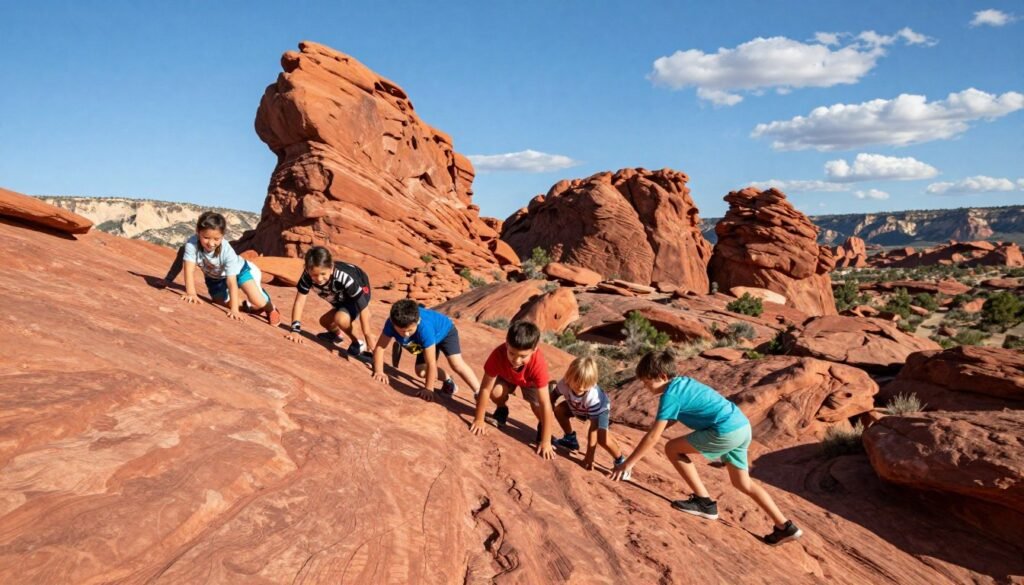
| Destination | Location | Landscape | Kid-friendly way to explore |
|---|---|---|---|
| Red Rock Canyon | Near Las Vegas | Red-rock scenery | Explore the outdoor setting |
| Valley of Fire State Park | Nevada near Las Vegas | Sandstone formations | Choose Fire Wave or White Domes |
| Goblin Valley State Park | Utah between Capitol Reef and Canyonlands | Mushroom-like formations | Wander among the goblins |
Red Rock Canyon sits near Las Vegas, while Valley of Fire State Park is about an hour from the city. At Valley of Fire, the Fire Wave trail runs 1.25 miles round-trip, so it is a clear choice for families ready for a defined walk.
The White Domes Trail includes a small slot canyon, which gives the route a different feel. Goblin Valley State Park lies roughly halfway between Capitol Reef and Canyonlands national parks. Its mushroom-like formations invite curious kids to look around, but grown-ups should still watch where everyone steps.
Use the trail distance and the youngest child’s stamina to decide what counts as a reasonable adventure. If red rock sounds too much like a hike, White Sands offers a very different landscape where the sand itself becomes the activity.
Is White Sands Worth a Day Trip With Kids?
White Sands looks like a snowy field, but the ground is gypsum sand. That contrast is part of the fun, and White Sands National Park covers 275 square miles of white gypsum dunes.
Plan time for walking the dunes or sledding, and bring a sled or buy one before entering. The gift shop closes early, and park sleds are described as expensive, so arriving late without a sled can limit your choices.
The park became a national park in December 2019. Families can hike across the dunes or try sand sledding, though not every child will enjoy sliding down a hill made of sand. Some may prefer building, walking, or simply taking in the unusual color.
Late afternoon can be a good time to arrive when the schedule allows. Stay for sunset if it fits your day, and give yourself room to walk rather than rushing from one dune to another.
Check the day’s conditions and timing before setting out, especially if you want to catch sunset. Families who prefer a canyon viewpoint or an established trail may be happier with the national park choices ahead.
Which National Parks Work Best for a One-Day Visit?
The best national park day depends on whether your family wants viewpoints, a manageable walk, or a demanding hike. Pick the pace first, then choose a trail that matches it.
A famous hike is not automatically the right hike for every family. The Grand Canyon, Zion National Park, and Bryce Canyon can each offer a memorable visit, but their routes call for different levels of effort.
Grand Canyon Viewpoints and Short Trail Choices
The Grand Canyon is 277 miles long, but a rewarding visit does not require a long hike. The South Rim is the more accessible and more frequently visited side, with viewpoints that can make a full outing on their own.
The South Rim’s Rim Trail runs 12 miles and is mostly flat and mostly paved. You can choose a section that fits your time rather than treating all 12 miles as a family challenge.
The South Kaibab Trail reaches Ooh-Aah Point in 1.8 miles. That is a different kind of walk from the Rim Trail, so think about the group’s energy before choosing it. The North Rim is open to visitors from May through October.
Zion and Bryce Canyon for Families Who Want a Hike
Zion National Park may appeal to families who want a hike, but trail choice matters more than a famous name. Angels Landing is a strenuous 5-mile hike, not a casual grandparent-and-kids stroll.
Bryce Canyon’s Navajo Loop is 1.4 miles, a shorter distance for families considering a defined walk. A shorter route can still feel demanding, so consider the youngest hiker and the day’s conditions.
National parks can suit different kinds of family days, from viewpoint stops to hikes with a real effort behind them. When scenery is not the only reason to go, historic places can bring the past into the day.
Where Can Grandkids Get a Hands-On History Stop?
A good history stop gives kids something to see and adults context worth discussing. Respect comes first, especially at places connected to Indigenous people and living communities.
Taos Pueblo is both a UNESCO World Heritage site and a living community where people still live. Treat the visit as time in a real place, not as a stage set for a family photo.
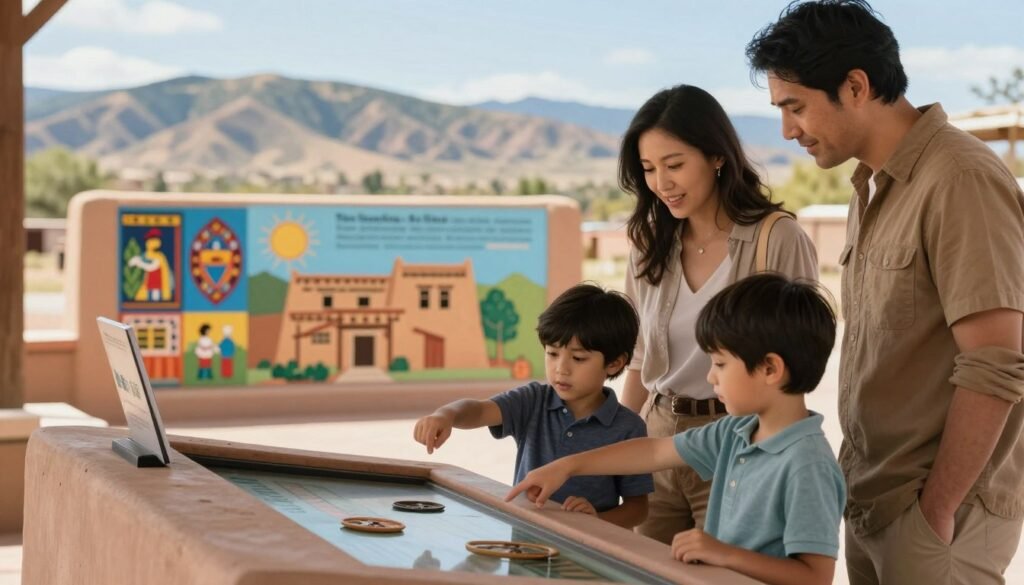
Living Heritage at Taos Pueblo
Taos Pueblo is a historic place with community life that continues today. Visitors can learn about a place shaped by people across many years, while remembering that residents are going about their lives.
Move through the site with care, follow local rules, and speak respectfully. That approach helps children see that history is not locked away in another world. It can be part of the present, too.
Ancient Dwellings and Indigenous History
Montezuma Castle National Monument protects well-preserved ancient dwellings in Arizona. Mesa Verde National Park is known for preserved Ancestral Puebloan cliff dwellings in Colorado. Both can help families discuss how people built homes and lived in specific places.
Canyon de Chelly National Monument includes ancient ruins and prehistoric rock art. These sites hold meaning beyond what a child can point to or photograph. Give the history room for questions, and avoid treating Indigenous cultures as props for entertainment.
| Site | State | What it preserves | What visitors can learn about |
|---|---|---|---|
| Taos Pueblo | New Mexico | A living historic pueblo | Continuity of community life |
| Montezuma Castle National Monument | Arizona | Ancient dwellings | Historic settlement |
| Mesa Verde National Park | Colorado | Ancestral Puebloan cliff dwellings | Architecture and history |
Different places offer different ways to learn about people, homes, and the past. For a change of pace, roadside and engineering stops can make the drive itself part of the day.
Which Roadside Stops Make the Drive Part of the Adventure?
A child may ask whether the next stop is just another stretch of road, then find a roadside oddity worth talking about. Make the drive count by choosing a stop that fits the family’s interests.
Pick a stop for its main appeal: roadside character, a scenic drive, or engineering. These choices can add variety to a road trip without turning every mile into a separate mission.
| Stop | Location | What makes it distinctive | Best fit |
|---|---|---|---|
| Seligman, Arizona | Old Route 66 | A kitschy historic-highway stop | Families who enjoy roadside character |
| Monument Valley Tribal Park | Arizona and Utah border | 17-mile self-drive loop and distinctive buttes | Families who want a scenic drive |
| Hoover Dam | Nevada and Arizona | 1930s engineering landmark | Families interested in infrastructure |
Seligman is a roadside stop along Old Route 66, with the kind of character that makes a quick break feel like an attraction. Monument Valley Tribal Park is a 92,000-acre Navajo-owned park on the Arizona and Utah border.
Visitors can drive Monument Valley’s 17-mile loop in their own vehicle. A separate Navajo-guided backcountry tour is an optional extra, not a requirement for seeing the loop. The buttes make the drive distinctive without requiring a hike.
The Hoover Dam was built in the 1930s, and its power station supplies Nevada, Arizona, and California. That makes it a good fit for kids curious about how large structures work. Once you have picked a stop, the next challenge is keeping the day affordable and flexible.
How Can You Find Free and Low-Cost Things to Do With Kids?
The snack budget can quietly become the main character if nobody makes a plan. Set a few limits before leaving, so the day does not turn into a string of denied requests.
A low-cost outing can still include gas, parking, food, or optional activities. Check current access details before departure, then look for free places to take kids this summer or places to go with kids for free near your route.
Nearby public outdoor spaces, local events, and free-viewing opportunities can all help shape the day. If you are searching for free things to do tomorrow with kids, check what is open and practical first, rather than building a plan around a listing that no longer applies.
Use these four cost-control moves to keep extras from multiplying like a family group chat:
- Pack snacks and water.
- Choose no more than one paid anchor activity.
- Check parking and admission separately.
- Set a souvenir limit before leaving home.
One paid activity can give the day a clear focus without making every stop cost money. A souvenir limit also works better when everyone knows it before the gift shop appears, because small toys have excellent timing.
Access, parking rules, and event details can change, so check them before you go. After the cost plan, a few comfort and safety details can help the outing stay enjoyable.
What Should You Prepare Before Taking Grandkids Out?
A sunny forecast can still become a long, tiring day for a child who is thirsty or uncomfortable. Pack for the whole outing, not just the first cheerful hour.
Bring water, sun protection, comfortable shoes, snacks, and a backup indoor or shaded option. Those five basics can help when walking takes longer or energy dips sooner than expected.
Think of places to take kids for free near me today as a prompt to check access and conditions, not just a name on a map. Look at park alerts, opening information, weather, and rules for any activity before setting out.
Use this five-item preparation list before the family leaves home:
- Water for the day.
- Sun protection for the conditions.
- Comfortable shoes for walking.
- Snacks that travel well.
- A backup shaded or indoor option.
Adjust the plan for the youngest or least mobile person. If that person needs more breaks, the whole family benefits from a pace that leaves room to breathe.
With the practical details handled, arrange the day so its main activity lands when everyone still has energy. A good route should feel like a plan, not a group project with no end time.
How Do You Build a One-Day Route Without Overloading Everyone?
Two big attractions plus a long drive can turn a fun day into a group project nobody wanted. Keep the route light, especially when the road takes several hours each way.
When driving takes several hours, make the arrival activity lighter instead of stacking major stops. A single destination can feel like plenty after hours in a car, even if everyone packed heroic expectations.
Use four steps to arrange the day without packing every hour:
- Select one main destination.
- Add no more than one nearby stop.
- Plan food and a rest break.
- Set a turn-back time that avoids pushing tired kids into a bonus adventure.
A clear turn-back time can keep a pleasant outing from stretching into a late drive with sleepy passengers. The goal is not to squeeze every possible stop from the road trip. It is to leave enough time for the main activity and the ride home.
Keep some space between the destination and the meal, especially if the family’s energy is hard to predict. A flexible day has room for a slower walk or a longer break without making anyone feel behind schedule.
Once the route fits the available hours, make the final choice based on who is coming along. The right destination is the one that suits the kids, not the one with the biggest name.
How Do You Match the Outing to Your Grandkids?
Ask yourself whether this outing is for the grandkids or for an adult’s bucket list. Their interests count, and so do their energy and comfort.
Choose the activity by the children’s stamina and interests, not by a destination’s fame. A kid who wants to climb may enjoy a short outdoor trail, while a child drawn to animals and exhibits may prefer a museum-style visit.
A child who tires easily may do better with one viewpoint or a brief stop than a full day of walking. That is not a failed vacation; it is a plan that respects the person with the shortest legs and the loudest honest feedback.
Children change over the years, so an outing that worked before may not suit them now. Ask what sounds fun, then consider how long they can travel and how much walking feels comfortable.
A famous destination is not automatically best if the drive or activity does not suit the youngest person. A smaller plan can give the family more time to enjoy the place instead of negotiating with a tired passenger.
Pick one outing that fits your crew, then check its current access, weather, and opening details before leaving home. That small final step can save a great deal of roadside improvisation.
Conclusion
A great family day does not need a heroic itinerary or a heroic credit-card bill. Choose a manageable outing that suits the kids, then keep the plan simple enough to enjoy.
The best trip is often the one where everyone has enough energy to notice the funny little moments. Those are the parts that outlast the souvenir, which may be good news for your shelves.
Pick one destination from this list and check its current access, weather, and opening details before setting out. Then pack the snacks, appoint a navigator, and prepare for at least one debate about the playlist.