A $300 hotel bill can make your wallet look ready to file a missing-person report. A cheaper place near wide-open scenery and hiking trails feels like a small financial miracle.
Affordable Southwest state park cabins can make a nature vacation easier on your budget, but an under-$85 nightly rate is a goal, not a promise. Dates, lodging style, and extra charges all affect what you pay.
You can still trade a pricey room for a simple retreat, good food, and time outside. I’ll start with practical Southwest options, then show what different budgets can actually get.
Key Takeaways
- Some rustic and standard cabins can meet an $85 nightly target.
- The total stay cost can exceed the advertised nightly rate.
- Midweek dates may cost less than weekend dates.
- Cabin amenities vary, so check each listing before booking.
- Pack for the facilities you will actually have.
Affordable Southwest State Park Cabins That Can Cost Under $85 a Night
Yes, some Southwest State Park stays can cost under $85 per night, depending on the lodging type and date. Rustic cabins are the clearest fit, while standard cabins and named park options can land below that mark on some dates.
These are nightly rates, not the total cost for the full stay. Taxes and reservation fees can raise the final bill, so a low listed price doesn’t guarantee it will stay within budget.
An under-$85 nightly rate is possible for some stays, but it is not a promise for every cabin or date.
| Place or option | Lodging type | Typical nightly rate | Under-$85 fit |
|---|---|---|---|
| Southwest rustic cabin | Rustic cabin | $35-$60 | Often, before fees |
| Southwest standard cabin | Standard cabin | $65-$110 | Some rates may fit |
| Palo Duro Canyon State Park | Cabin or glamping | $65-$120 | Some rates may fit |
| Davis Mountains Indian Lodge | Lodge room | $75-$150 | Some rates may fit |

Texas options near canyon country
Palo Duro Canyon State Park offers cabin and glamping options listed at $65-$120 per night. That range puts some dates within reach, though popular nights can go above the target.
Davis Mountains State Park’s Indian Lodge has 39 rooms, with listed nightly rates of $75-$150. It is a lodge rather than a cabin, but it gives you another park stay to compare.
Arizona desert-park options
Lost Dutchman and Kartchner Caverns are Arizona desert-park options worth checking for cabin lodging. Their rates vary, so compare the dates you want rather than treating any one price as fixed.
The best affordable Southwest state park cabins fit your budget and comfort needs. Regional typical ranges are $35-$60 for rustic cabins, $65-$110 for standard cabins, and $100-$180 for deluxe lodging. The nightly rate alone cannot tell you whether a place suits your comfort needs, so let’s look at cabin types.
What You Get for the Price: Cabin Types and Amenities
Two cabins with similar nightly rates can offer very different comfort, especially when one has a bathhouse and the other has a private shower. The cabin type matters as much as the price tag.
A dry cabin has no indoor plumbing, with restrooms and showers typically located nearby. Under-$85 options may be simple, so check the facilities before you picture a full kitchen and fluffy towels.
| Type | Sleeping setup | Bathroom | Cooking setup | Climate control |
|---|---|---|---|---|
| Rustic | Bunks or cots | Shared bathhouse | No kitchen; wood stove may be present | May have no air conditioning |
| Standard | Beds | Private shower is common | Kitchenette or microwave | Electric heat or air conditioning |
| Deluxe | Multiple bedrooms | Full bathroom | Full kitchen | Central heat and air conditioning |
| Glamping | Queen bed is common | Arrangements vary | Mini-fridge or microwave | Air conditioning and heat are common |
Rustic and dry cabins
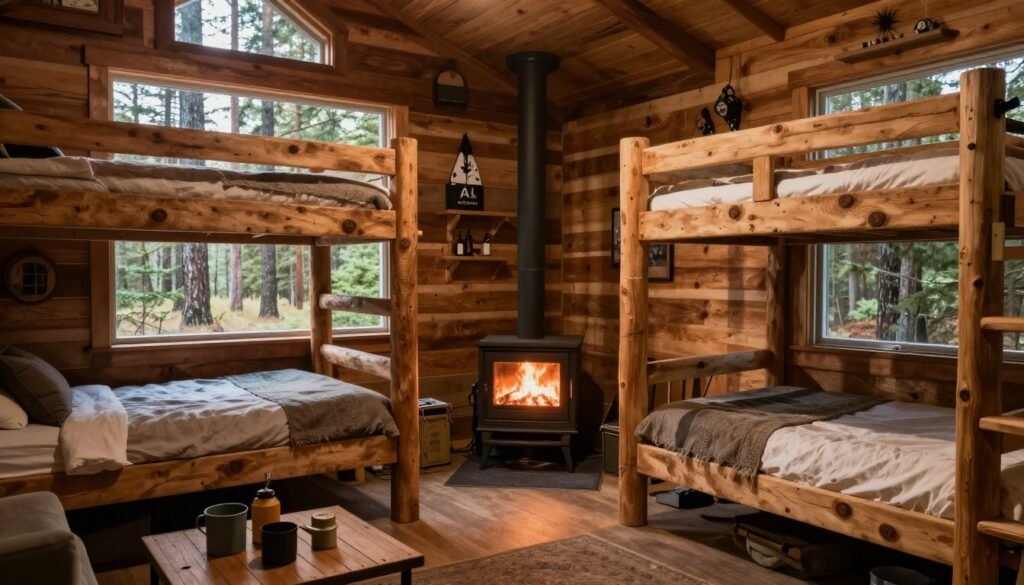
A rustic state park cabin may have bunks or cots, a shared bathhouse, and no kitchen. Some have a wood stove, which adds charm and also gives you a new job: learning to use it.
Cooking options can be limited to an outdoor grill or a basic stove, if one is provided. Ask what cooking fuel the cabin allows, since a photo of a porch does not answer that question.
Standard, deluxe, and glamping stays
Standard cabins commonly include beds, a private shower, and a kitchenette or microwave. Electric heat or air conditioning is common, but amenities differ by individual cabin.
Deluxe cabins commonly have multiple bedrooms, full bathrooms, a full kitchen, and central heating and air conditioning. Glamping stays often offer a queen bed and a mini-fridge or microwave, while bathroom arrangements vary.
Read the listing for the exact facilities, not just the broad type. Choose based on must-haves rather than attractive photos, then use timing to improve the deal.
When Midweek and Off-Season Stays Make the Biggest Difference
Moving a cabin stay away from the weekend can meaningfully affect the nightly rate. Midweek bookings can save 20%-40%, while off-season cabins can be 30%-50% cheaper.
Those savings are general planning ranges, not guaranteed discounts. Do not add both figures together as if every price cut stacks neatly; parks set prices and fees by date.
Southwest peak season is listed as October-April, while June- August is the best-value season. That can feel backward if you assume summer is always the most expensive time.
Actual prices depend on the park, date, and lodging type. A summer weekday may beat a busy fall weekend, while a holiday can push a rate up. Compare real dates instead of trusting a seasonal hunch.
- Compare Tuesday-Thursday dates with weekend options.
- Check dates outside school breaks and holiday weekends.
- Compare the park’s peak season with its value season.
- Check the final rate for any date-specific fees.
A flexible date can matter more than a fancy search trick. If your schedule allows, test a few nights on either side of your first choice and compare the nightly prices.
Once you find a date that works, look beyond the listed rate. Taxes, fees, and stay rules shape the full amount due before you confirm.
How to Book Without Getting Surprised by the Total
The booking cart can start with a friendly nightly rate and end with a total that makes you check whether it added a boat. Extra charges and minimum-stay rules can change what a cabin costs.
Calculate the full total stay cost before paying. Taxes, reservation charges, cleaning fees, entrance fees, and minimum stays can affect the final amount, and fees vary by park and reservation.
Check the full cost and stay rules.
Weekday stays usually have a one-night minimum, weekends commonly require two nights, and holiday weekends commonly require three. Some popular summer cabins require a seven-night minimum.
Peak summer weekends may need booking 6-11 months ahead. A cabin’s cooking setup, occupancy limit, and fee details can also affect your plans, so read the listing before you reach checkout.
Reserve through the right booking system
Start with the official park or state reservation page. ReserveAmerica handles reservations for more than 40 state park systems, while Recreation.gov primarily serves federal lands and includes some state partnerships.
Some states run their own reservation systems. These are routes to check, not endorsements; the correct system depends on the park and state.
Use this booking sequence to keep the price and rules in view:
- Check the official park or state reservation page.
- Confirm your dates and the number of people.
- Read the cabin’s amenity and fee details.
- Calculate the full cost, including required charges.
- Verify cancellation and minimum-stay terms before paying.
Save the confirmation, rules, and cabin details once the reservation is set. A screenshot helps when cell service fades, and it gives you the facts you need to prepare for the actual stay.
Pack for the Cabin You Booked, Not the Cabin in Your Imagination
Assuming every cabin comes with a stocked kitchen and fresh towels is a classic packing mistake, right up there with bringing one sock. Check first, because cabins can differ in basic amenities.
Confirm water access, bathroom setup, air conditioning, parking, and indoor cooking rules before you pack. Rustic cabins may have hand pumps or require guests to carry water.
Pack for the facilities listed in your reservation, not the kitchen you pictured while scrolling.
Some cabin parks have limited or no cell service, so download maps before you leave. State parks commonly set quiet hours around 10 p.m.-6 a.m., which is worth remembering before your late-night campfire karaoke career begins.
Use this checklist to match your gear to the cabin and the trip:
- Bedding and towels, unless the listing says they are provided.
- Toiletries and food for your planned meals.
- Cookware and cooking fuel suited to the cabin’s stove or grill rules.
- A flashlight and downloaded maps for weak cell service.
- Pet-policy confirmation and leash supplies if bringing a pet.
Bring food that stores well, and keep it secure around wildlife. Buy firewood locally instead of hauling it from home; do not transport firewood more than 50 miles.
Hiking trails, water access, and wildlife viewing can make a simple stay feel special. The right facilities matter, but so does knowing what the park allows and what your pet can join.
With the basics covered, you can spend less time improvising and more time outside. A comfortable nature stay does not need a hotel’s full menu of extras.
Conclusion
The best deal is the cabin whose rate and facilities match your trip, not the fanciest listing. Under $85 per night is a workable target for some rustic or standard options and dates, not a universal promise.
Fees and amenities shape the real value, so judge the full stay cost, not the headline price. A little less luxury can still mean a restful retreat, especially when you came for trails, scenery, and time outdoors.
Pick two or three date options, check the official park reservation page, and compare total stay costs before booking. Your wallet can recover without demanding room service.