You mention a family getaway, and suddenly someone is pricing a hot tub, a mountain view, and enough snacks for a small movie theater. The packing has not even started.
A budget family cabin trip with grandkids can stay within a spending limit without dipping into retirement savings. The trick is making choices before anyone pays a deposit, not after the group chat discovers a luxury treehouse.
Grandkids can treat any cabin like a five-star resort if it has board games and pancakes. I respect their standards. They are refreshingly unconcerned with the mortgage.
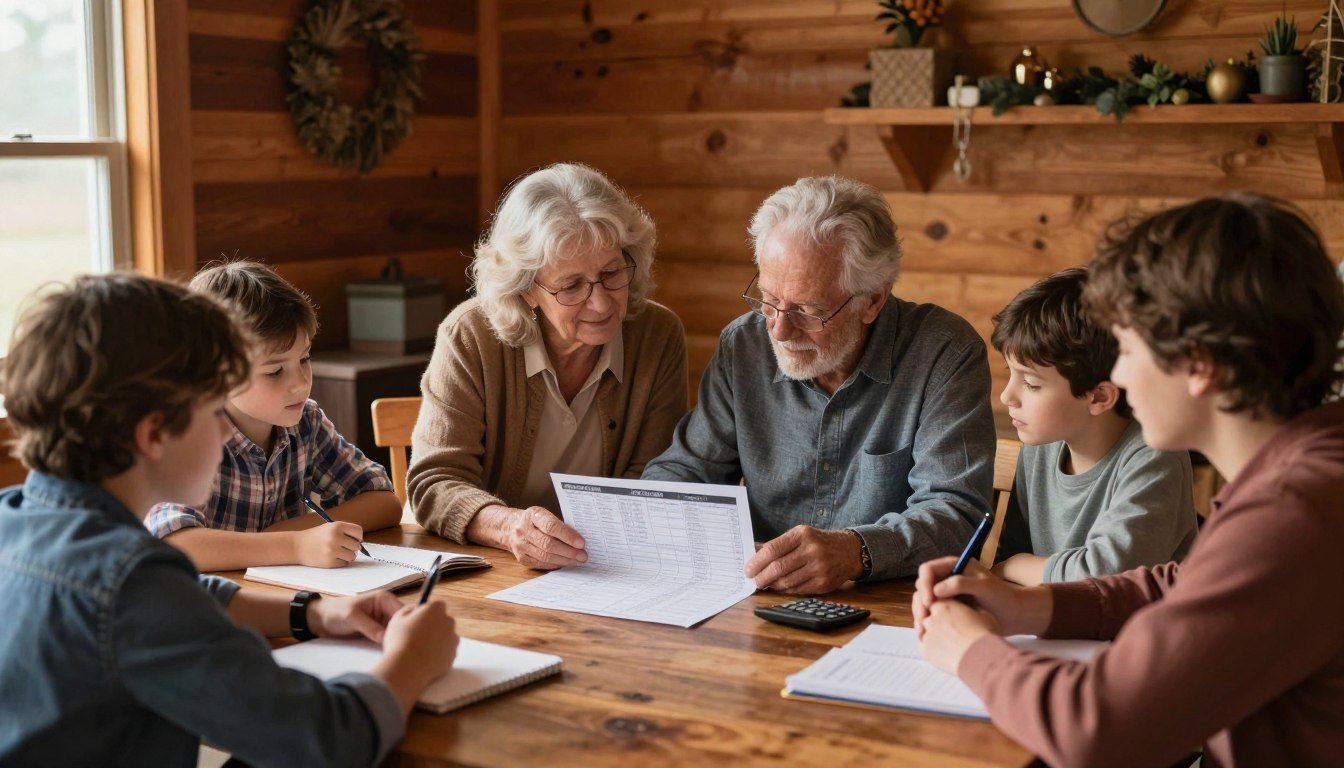
This plan helps you weigh lodging, meals, travel, and activities before money leaves your account. Start with the maximum amount your household can comfortably spend, then build the vacation around that number.
Key Takeaways
- Set a firm spending ceiling before choosing dates or lodging.
- Compare travel, cabin, food, and activity costs together.
- Agree on shared expenses before anyone books.
- Save gradually without cutting essentials or retirement contributions.
- Leave room for surprises and keep the schedule flexible.
How Do You Plan a Budget Family Cabin Trip With Grandkids?
Start with an amount your household can spend without borrowing or disrupting essential savings. That ceiling matters more than the cabin photos.
A weeklong vacation for a family of four can cost $8,000-$9,000, depending on destination, transport, lodging, food, and activities. That broad benchmark is not your personal spending limit.
Choose a ceiling your household can afford without borrowing or disrupting essential savings.
A commonly suggested vacation budget is 5%-10% of household income. For a household earning $80,000, that range equals $4,000-$8,000.
Use that range as context, not permission to spend the top amount. Family size and trip length change the total, and your needs may differ.
A contingency fund is money set aside for unexpected trip costs that do not fit the planned categories. Keep it inside the ceiling.
Before looking at cabins, write down the trip budget and estimate these five expense areas:
- Lodging, including the cabin rental and added fees.
- Transportation, including fuel, flights, or a rental car.
- Food, from groceries to restaurant meals.
- Activities, including tickets and low-cost options.
- Contingency fund for unexpected trip costs.
These numbers are estimates, not tiny contracts with the universe. Leave some room for prices to change before booking.
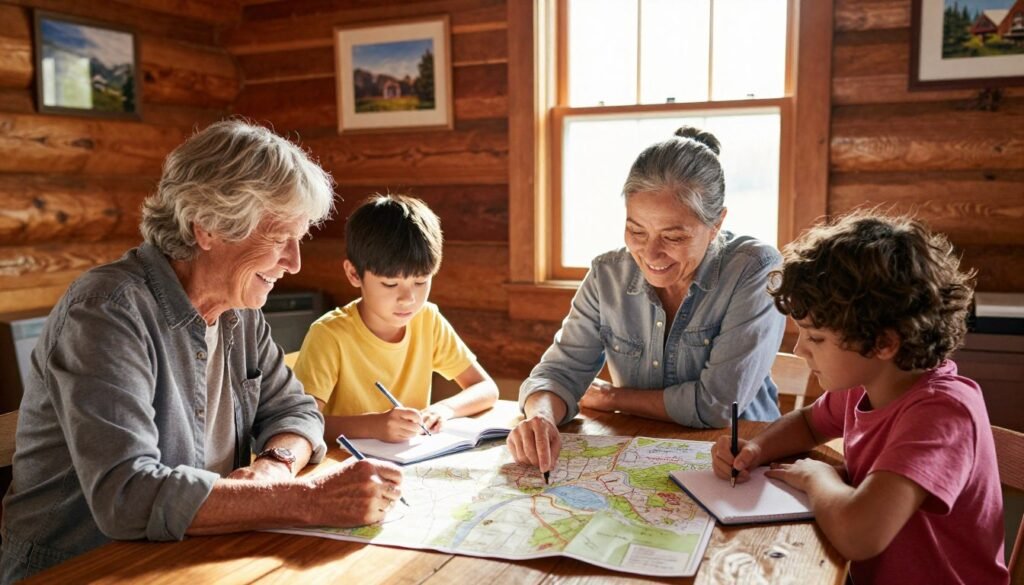
Keep retirement contributions and essential bills outside the vacation math. A trip shouldn’t leave you home with a credit card hangover.
Once you have a clear spending ceiling, you can look for a destination that fits it.
Which Cabin Destination Fits Your Budget and Drive?
Compare the cost of a longer drive with the price of staying closer to home. A cheaper cabin far away may lose its charm after fuel, meals, and hours in the car.
Nearby public lands can make a budget family cabin trip with grandkids in the USA easier on both money and patience. Shorter travel often leaves more of the budget for time together.
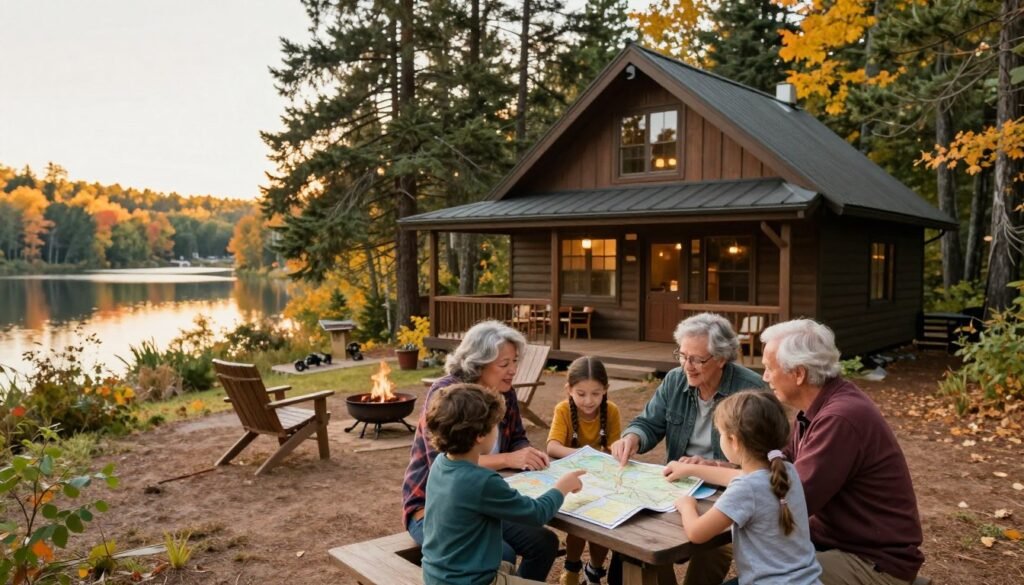
Start with nearby state parks and public lands.
Check state parks and public-land areas within a comfortable drive. Cabin access, rules, and open dates vary by site, so check the specific park.
A nearby stay can cut fuel use and reduce the chance of needing a hotel on the way. It may also let grandparents head home early if the group needs that option.
For a budget family cabin trip with grandkids in California, check state park and public-land cabin availability in your desired area. California is large enough to make “nearby” a flexible concept.
Compare what surrounds the cabin, too. A lower rate means less if every outing requires a long drive or paid admission.
Compare the Black Hills, the Ozarks, and the Smokies
The Black Hills, the Ozarks, and the Smokies are examples to research, not guaranteed bargains. The right fit depends on travel distance, lodging, and nearby activities.
Great Smoky Mountains National Park has no entrance fee. That can help families planning park visits, though travel and lodging still have costs.
| Setting | Travel effort | Low-cost appeal | Best fit |
|---|---|---|---|
| Nearby state park | Shorter drive for local families | Less fuel and time on the road | Families with limited travel days |
| Black Hills or Ozarks | Depends on starting point | Public lands and outdoor options to research | Groups near either region |
| Smokies | Depends on starting point | National park has no entrance fee | Families planning park visits |
Compare the full trip cost, not just the destination’s name. Affordability can shift with the calendar, so dates are the next piece to consider.
When Should You Book to Get Better Cabin Rates?
Peak travel periods differ by destination. Summer and winter are common peak periods in the United States, but local seasons vary.
Compare weekdays with weekends and check shoulder-season dates when school and family schedules allow. Flexible dates can widen your lodging choices.
A cabin near a ski area may face its busiest stretch in winter. A lake cabin may draw more visitors in summer.
Ask participating households which dates are truly possible before chasing a lower rate. A bargain on a school night is not much help if nobody can go.
Try moving the stay by a day or two, or compare a midweek arrival with a weekend one. Even a small shift can change the options you see.
Do not choose dates on price alone. A lower rate doesn’t help if the cabin lacks needed amenities or the schedule makes the trip impossible.
School breaks, work shifts, and older relatives’ travel needs all shape the choice. The calendar needs to work for people, not just the booking page.
Once the dates look possible, compare what each cabin rental includes before you commit.
What Should You Compare Before Booking a Cabin?
A low nightly rate can look less appealing when the group needs extra rooms or must eat every meal out. Compare total value, not the first number on the screen.
Cabin costs depend on location, dates, group size, amenities, and added fees. Check the full stay cost and whether the space suits your group.
Check sleeping arrangements and useful amenities.
A state park cabin may offer a simple place to sleep, while a private cabin rental may add privacy or a full kitchen. A cabin-style lodge can make shared amenities easier to reach.
Compare kitchen access, privacy, and distance to activities. A usable kitchen may help with food costs, but limited cooking space can leave everyone waiting for one burner.
Check the number and type of beds, bathrooms, and stairs. A loft bed sounds charming until someone realizes it requires climbing a ladder at midnight.
Look for kitchen equipment, laundry access, and the amenities your group will use. Don’t pay extra for a game room nobody plans to use.
Read the full cost and cancellation terms.
Review the policy for cancellation, refunds, added charges, and payment timing. Terms differ by booking, so read the actual details for the cabin you are considering.
Check whether the posted amount includes cleaning or service fees. A low nightly rate can climb once the final charges appear.
Ask whether the lodging has enough space for everyone without crowding older adults or young children. A clear sleeping plan prevents some predictable bedtime negotiations.
| Lodging type Kitchen Privacy What | hat to verify | ||
|---|---|---|---|
| State park cabin | May be limited | Separate cabin space | Cooking gear, bathrooms, rules |
| Private cabin rental | Often varies by property | Often more private | Beds, fees, cancellation terms |
| Cabin-style lodge | May be shared or in-room | Less private than a standalone cabin | Room layout, shared amenities, access |
The lodging choice affects how the family will get there and move around once you arrive.
How Can You Keep Transportation Costs in Check?
Compare a short drive with airfare that still leaves the family needing a car. The ticket price alone does not show the full travel cost.
Add fuel, parking, and wear on your car when estimating a drive. Compare that total with flights plus ground transportation.
Flying may work if the cabin is close to transit or a shuttle. If it is remote, a rental car can add signifimore planning.
Check rental-car needs before choosing flights. Confirm whether the group needs child car seats, and inspect any rented seat before travel.
For a quick estimate, check these five transportation items:
- Fuel for the full route.
- Parking at the cabin and along the way.
- Rental car charges and local pickup needs.
- Car seats for the children traveling.
- Local driving between the cabin and activities.
A rental car also needs enough room for people and bags. “Everyone fits” is not the same as “everyone can still bend their knees.”
Flying can save driving time, but airport transfers and local travel still count. A direct flight does not teleport the family to the cabin.
Once the route is clear, agree on who pays which shared costs.
How Should the Family Split Shared Costs?
One household may assume the cabin rental is split evenly, while another thinks the grandparents are covering it. Say the quiet part before anyone books.
Shared expenses are costs participating households agree to pay together. Individual expenses are costs each household pays for itself. Set the split before anyone spends money.
Decide what the group pays together
The cabin rental and agreed group groceries often make sense as shared expenses. Write down exactly what belongs in each shared category.
Decide whether the split is by household, person, or another agreed method. An equal household split may feel unfair when one family has two people and another has five.
Travel distance can change the picture, too. A household driving several hours may have very different transportation costs from one arriving nearby.
Talk about everyone’s budget with care. A family trip should not become a public audit of who earns what.
Keep optional and household costs separate.
Each household can cover its own travel, personal meals, and optional activities. That keeps an extra attraction from appearing on everyone’s bill by surprise.
Agree on the arrangement in a message or shared note. Clear words help more than a vague “we’ll figure it out” sent with a thumbs-up.
| Expense | Shared or individual | Possible split | Example |
|---|---|---|---|
| Lodging | Shared if agreed | By household or person | Cabin rental for all participating households |
| Group groceries | Shared if agreed | Equal share or agreed amount | Breakfast supplies for everyone |
| Opt-in activities | Individual by choice | Each household pays | One family chooses an extra paid activity |
Make sure every household knows what it will pay before booki. With that sorted, meals become the highest recurring shared cost.
How Can You Keep Cabin Meals Affordable?
The group arrives hungry, the bags are still in the car, and nobody knows what’s for dinner. That is not the moment to invent a meal plan.
Plan a few easy meals before leaving home, then shop for the group’s real preferences and dietary needs. Cooking one or two meals a day can help when the kitchen works.
Plan simple meals before leaving home.
Taco night, sandwiches, and a shared breakfast need little fuss. Keep ingredients simple enough that nobody has to become a short-order cook on vacation.
Ask about allergies and food needs before buying groceries. A bargain tub of yogurt is not a bargain if nobody can eat it.
Plan meals around the kitchen access you actually have. A small fridge or limited cookware may change what is easy to prepare.
Bring reusable water bottles for the drive and outings. Buying drinks for every person, every day can quietly add up.
Balance cabin cooking with a few meals out.
Eating out can be part of the trip, not a budget failure. Pick a few meals that feel special and keep the rest easy.
A grocery stop near closing may offer discounted baked goods. Local restaurants away from the busiest tourist areas can also cost less.
Limited kitchen access can erase expected savings. If cooking means buying extra gear or making several trips for supplies, compare that effort with simple meals out.
Let each household handle personal snacks if that feels easier. Agreeing on shared groceries does not mean every granola bar needs a committee vote.
A manageable meal plan leaves more room to enjoy the day. Next, fill the schedule with activities that don’t require big tickets.
Which Activities Make Cabin Days Memorable Without Big Tickets?
A pricey attraction ticket can compete with a board game that becomes a grandkid championship. The rematch may be free, though the rules can change dramatically.
Build the day around free or low-cost choices, with indoor backups ready. Check current park and local tourism details before you go.
Mix outdoor time with easy indoor backups.
Hiking, safe swimming where permitted, and ranger-led programs when offered can fill a day without relying on costly attractions. Check local park information for current rules and times.
Keep board games and storytelling ready for rain or tired legs. Stargazing can work on a clear night, but clouds do not care about your plans.
A free activity still needs to suit the group’s ages, abilities, and weather. A steep trail is not a bargain if someone cannot enjoy it safely.
Let grandkids help choose the day
Offer choices that fit the budget, then let grandkids pick a few. Children often enjoy having a say, especially when the choices are not “laundry” and “more laundry.”
Make a short list of five options together:
- A short hike on a suitable trail.
- Swimming where safe and permitted.
- A ranger-led program, if one is offered.
- Board games inside the cabin.
- Stargazing or family storytelling.
Check activity details with local tourism and park information before setting the schedule. Rules, program times, and access can vary by place.
Keep one quiet option for a low-energy afternoon. A full day isn’t automatically better, despite what the most energetic seven-year-old may argue.
Those activity choices shape how to set up the cabin safely and comfortably for every generation.
How Do You Make a Cabin Safe and Comfortable for Grandkids?
A loft can look thrilling to a toddler and become a supervision problem in seconds. Check the space yourself, even when the listing says “kid-friendly.”
Look at railings, stairs, porch edges, water access, and fire features. An adult’s own safety check still matters.
Check the cabin for age-specific hazards.
Check loft and bunk-bed railings, steep stairs, and porch edges. Ask whether adults can supervise children easily from the main living area.
Notice nearby water and fire features. Set clear rules for children around each one before the first game of chase begins.
Check whether doors, stairs, and sleeping areas suit the children’s ages. A cabin can be lovely and still need close supervision.
Walk through likely hazards with the parents or caregivers. They know which child is a cautious observer and which one treats furniture like a stunt course.
Plan for comfort, mobility, and supervision
Make sure sleeping arrangements suit each person’s age and mobility needs. An upper bunk may not work for a child who moves around at night or an adult with limited mobility.
Choose sleeping spots that let caregivers respond easily. A grandparent should not need to cross a dark loft to check on a child.
Keep the group’s activities in mind when planning supervision. Swimming, trails, and fire features may call for closer adult attention than board games.
Use this five-item safety check before settling in:
- Stairs and railings, including lofts and bunks.
- Water access and clear supervision rules.
- Fire features and safe distance from children.
- Sleeping setup suited to ages and mobility.
- Supervision from common areas and outdoor spaces.
Once the cabin works for the group, pack the things everyone will actually use.
What Should You Pack for a Cabin Weekend?
You can pack for every possible weather pattern and still forget the phone charger. It happens, usually after the bag is zipped.
Pack by need, not by fantasy. Check what the cabin supplies before hauling duplicates.
Use five simple groups to keep the list under control:
- Weather layers and rain gear for changing conditions.
- Sturdy shoes for trails and uneven ground.
- Medications and basic first aid supplies.
- Chargers and a flashlight for dark rooms or paths.
- Reusable water bottles and a child’s comfort item.
Check the cabin’s supplies before packing extra towels, cooking tools, or blankets. The goal is not to move an entire house into the car.
The easiest things to miss are often unglamorous daily-use items. Medications, chargers, and weather-appropriate layers beat a novelty gadget that stays in its box.
Ask each household to pack personal items and share any group gear. That way, you avoid arriving with four flashlights and no one’s prescription medicine.
With the useful gear gathered, you can sketch a simple rhythm for the days at the cabin.
How Can You Plan a Relaxed Three-Day Cabin Trip?
Trying to fit every activity into one weekend can exhaust kids and grandparents alike. Leave breathing room between the drive and the fun.
Use a loose rhythm rather than a strict timetable. Keep space for weather, naps, and the group’s energy.
| Day | Morning | Afternoon | Evening |
|---|---|---|---|
| Arrival day | Travel and check-in | Unpack and settle in | Easy dinner at the cabin |
| Full day | Outdoor activity | Downtime or a short outing | Relaxed time together |
| Departure day | Breakfast and packing | One nearby stop, if time allows | Travel home |
On arrival day, give everyone time to settle before adding plans. A long drive plus an immediate outing can turn cheerful children into tiny exhausted critics.
Use the full day for one main outdoor activity, then leave the afternoon open. That gives people time to rest without making the day feel empty.
On departure day, eat breakfast, pack, and check out without rushing. Add one nearby stop only if the group has time and energy.
Weather can change the plan, and naps may happen at inconvenient but entirely predictable times. The table is a loose rhythm, not a military operation.
A flexible schedule is easier to enjoy when spending stays visible throughout the trip.
How Do You Track Spending While You’re Away?
After three busy days, remembering who paid for groceries can feel like a memory test nobody studied for. Write it down while it is fresh.
Use one shared notes file, spreadsheet, or budgeting app for trip expenses. Record each purchase and mark it shared or individual.
Keep the method simple enough that everyone will use it. A phone note works fine if participating households agree on the same place.
Record purchases as they happen, including the amount and who paid. Mark shared expenses separately from individual expenses, so one family’s personal stop doesn’t get added to the group bill.
Check the totals briefly at the end of each day. A quick review helps the family spot a rising cost before the trip ends.
You do not need a special app to keep track. Choose one clear method, then stick with it instead of creating three competing spreadsheets.
Do not leave every receipt and all the mental math until the drive home. Road-trip accounting is rarely anyone’s favorite passenger activity.
Once trip spending is clear, build the fund before you leave.
How Can You Save for the Trip Without Raiding Your Nest Egg?
A $4,000 goal becomes a manageable daily target when you start saving a year ahead. Small amounts can add up without turning vacation planning into a financial stunt.
First find the gap between current trip savings and your target. Divide that gap by the weeks or months left.
Choose a savings target and timeline.
Saving $4 a day adds up to more than $1,400 over a year. Saving about $11 a day for a year reaches roughly $4,000.
Those examples make a target easier to picture, but your own amount depends on the gap and timeline. Set a weekly or monthly transfer that fits your household.
Keep the trip fund separate from retirement savings and everyday bills. A distinct account or labeled savings space can make the balance easier to see.
Find small changes that fit your household.
Meal planning, brewing coffee at home, avoiding impulse purchases, or saving loose change may free up money. Pick changes that fit your life, not a list of universal sacrifices.
Some households may prefer one small change, while others can set aside a steady amount each payday. The best approach is one you can keep using.
Do not cut essentials or retirement contributions to fund a vacation. If the target does not fit, adjust the trip plan or timeline instead.
A savings plan can cover the main costs, while a few surprise expenses may still appear. Make room for those before the final payment.
What Extra Costs Could Sneak Into the Budget?
A rainy afternoon can turn the planned outdoor day into an unexpected paid activity. Keep some room for weather to change the plan.
Consider a 10%-15% buffer as a rule of thumb, adjusted for trip length, distance, and prepaid costs. A contingency fund is a cushion, not permission to overspend.
Check small fees and family-specific needs.
Possible extras include cleaning or service fees, parking, pet care, child gear, laundry, and extra groceries. Each may be small on its own, which is how they sneak past the budget committee.
Some families need child gear or pet care, while others do not—list only the costs that match your group instead of padding every category unquestioningly.
Check booking details for added fees and cancellation terms. They can vary by booking, so include the actual charges and rules in your estimate.
A backup activity for bad weather may cost money if indoor options are limited. Keep one low-cost choice in mind before rain starts tapping the windows.
Leave room for weather and last-minute changes.
A longer trip or farther destination may call for a bigger cushion. A trip with more costs prepaid may need less flexible cash during the stay.
Set the buffer as part of the trip plan, not an extra amount to spend just because it exists. If nothing unexpected comes up, the money can stay saved.
Think about needs that could change after booking, such as laundry or extra groceries. The aim is to absorb a surprise without borrowing or cutting essentials.
Once the buffer is in place, confirm the booking details before sending payment.
What Should You Confirm Before You Book?
A booking confirmation may include an added charge or unclear house rules. Pause before paying and check the full details.
Use this four-item booking checklist: total price and added fees, cancellation and refund policy, sleeping capacity and amenities, and arrival instructions with local access. Confirm the policies directly before payment.
Confirm the full price, rules, sleeping setup, and arrival details before paying.
- Total price and added fees.
- Cancellation and refund policy.
- Sleeping capacity and needed amenities.
- Arrival instructions and local access.
| Confirm: What | What to verify; Why | y it matters |
|---|---|---|
| Total charges | Full amount and added fees | Shows the real lodging cost |
| Cancellation terms | Refund rules and deadlines | Clarifies what happens if plans change |
| Occupancy and sleeping setup | Guest limit, beds, and needed amenities | Confirms the group can stay comfortably |
| Arrival and access | Check-in steps, directions, local access | Helps the group reach the cabin |
Share the confirmed plan with participating households. Include the dates, agreed expenses, arrival details, and any rules everyone needs to know.
Before committing, ask whether the trip still fits the budget and the group’s needs. Then you can move ahead with fewer surprises waiting at the door.
Conclusion
Grandkids are unlikely to grade the trip by the thread count. They may remember pancakes, a board-game rematch, or time with grandparents far longer than a fancy add-on.
A good trip is about being together, not filling every hour or spending the most. Start with a comfortable budget ceiling, then ask the family to agree on dates and shared costs.
Keep retirement savings out of the vacation plan, and let the trip fit your household instead of stretching it. That is a far better souvenir than a bill that follows everyone home.
Start a shared note today with your budget ceiling and two possible date ranges.